
The Banner County Court Calendar
Nebraska runs one public calendar interface for current and future settings across its courts. It is a scheduling tool. That matters, because the Banner County court calendar is not the register of actions: it can point you to a listed event, but it will not give you the full chain of filings, orders, costs, or final outcome. Begin at the official online calendar, which comes from the Judicial Branch calendar service, and choose County Court or District Court before selecting Banner.
The court you pick changes what you see. Banner County Court handles traffic, misdemeanors, preliminary hearings, probate, small claims, juvenile matters, and other county-court work. Banner District Court, the general-jurisdiction court, takes felony cases after bind-over, domestic relations, and district civil cases. A date can be missing from one court's calendar while a related matter is pending in the other.
Source: Nebraska Judicial Branch court calendars.
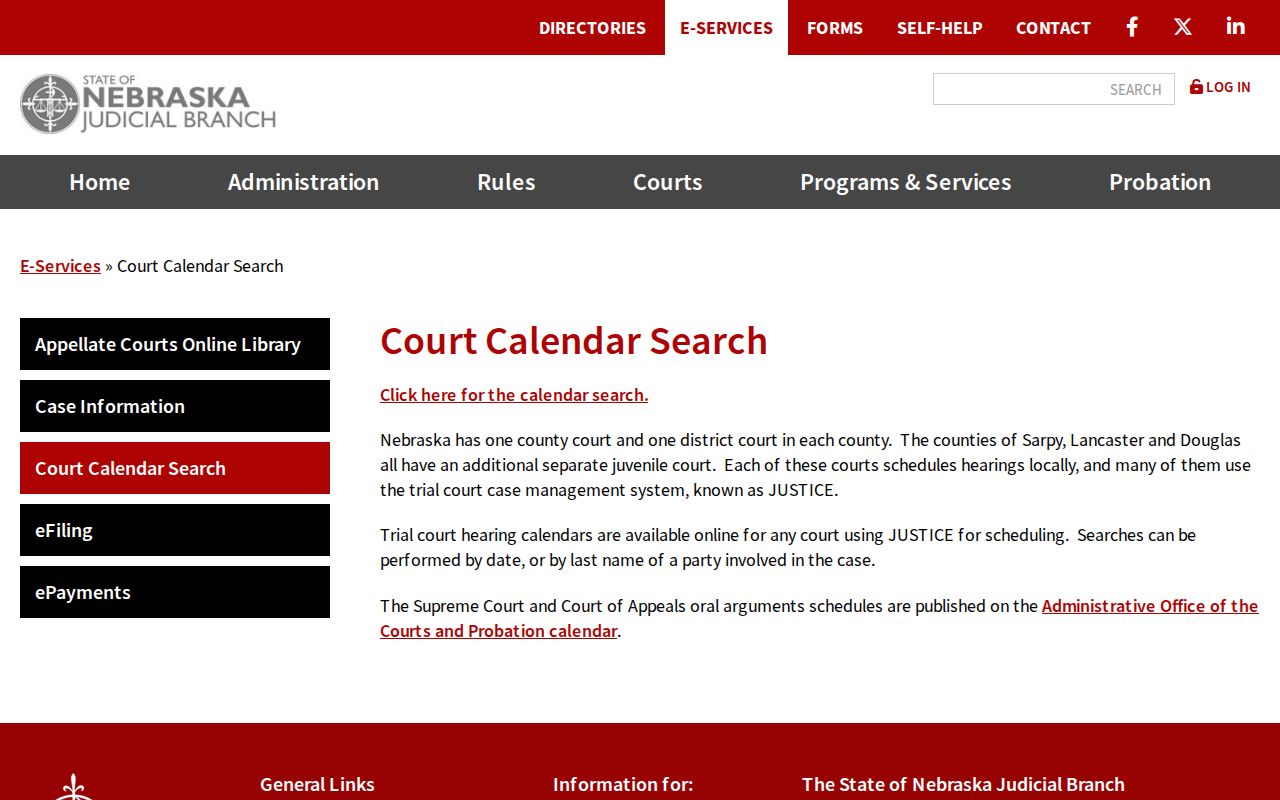
The landing page points visitors to the statewide calendar tool, and Banner appears in both the County Court and District Court selector paths.
Banner County Court Calendar: County Court or District Court?
Pick Banner County Court when the setting you expect involves a citation, a misdemeanor, a preliminary hearing, probate, a small claim, a guardianship, a conservatorship, an adoption, a juvenile matter, or a county-court civil case. Pick Banner District Court for a felony after bind-over. It also handles a domestic-relations matter, a district civil action, or anything else assigned there.
One event can sit in two court systems at once. A preliminary hearing in county court and a later felony case in district court may grow from the same incident. Yet each keeps its own record. The calendar does not stitch them into a single history. When the court level is unclear, pull the case number or caption from a notice. Then check the right register. Or call the clerk. Do not trust the first result.
Match results to the court on your notice. Choosing the wrong one can return an empty list. A related case may still have an upcoming setting elsewhere in Banner's trial-court structure.
How to Find Your Court Date
Once you select the court and Banner, the calendar offers two search routes. You can search by date or by last name. A date search covers current or future dates. A last-name search needs at least two characters. Following that order keeps the inquiry tied to the correct court and gives you a way to confirm any result that comes back missing or uncertain.
- Open the official online calendar and choose County Court or District Court, then select Banner.
- Search the planned date, or enter at least the first two letters of the party’s last name and review the matching settings.
- Record the case number, caption, date, time, location, and setting action shown. Use the online register service or a clerk inquiry to examine the broader case record.
- If a result is not displayed, ask at the courthouse public terminal, check a courtroom posting or docket call when available, and confirm the date with the party’s attorney if one is involved.
- For court-specific confirmation, contact the Banner District clerk: 308-436-5265 or Banner County Court: 308-436-5268. The district clerk is reached through the Harrisburg office and P.O. Box 67; county-court service is routed through the Gering office and P.O. Box 133.
A blank calendar result does not mean no date exists. Nor does it mean no action is required. A setting can be newly entered, moved, restricted from public display, or placed at another appropriate location.
Banner Calendar Date Search, Name Search, and Access Limits
Use a date when the notice names an expected day. Use the surname route when you do not know it. The interface lists Banner as a selectable county for both court types. Banner is not among the district-court counties the calendar's warning excludes. Read any results as a timely scheduling snapshot. They are not proof of every hearing tied to a name.
The public form may present a validation step before returning results. Technical errors can also interrupt a search. Neither is a sign that Banner is missing from the system. If a validation prompt or an error blocks you, wait and retry with the right court and spelling. You can also fall back on a public terminal or the clerk access channels described above.
The tool finds calendar listings. It does not settle identity questions from a surname alone. Write down the case number and caption before trusting a match. More than one listed matter can carry a similar party name.
Source: Nebraska court calendar search form.
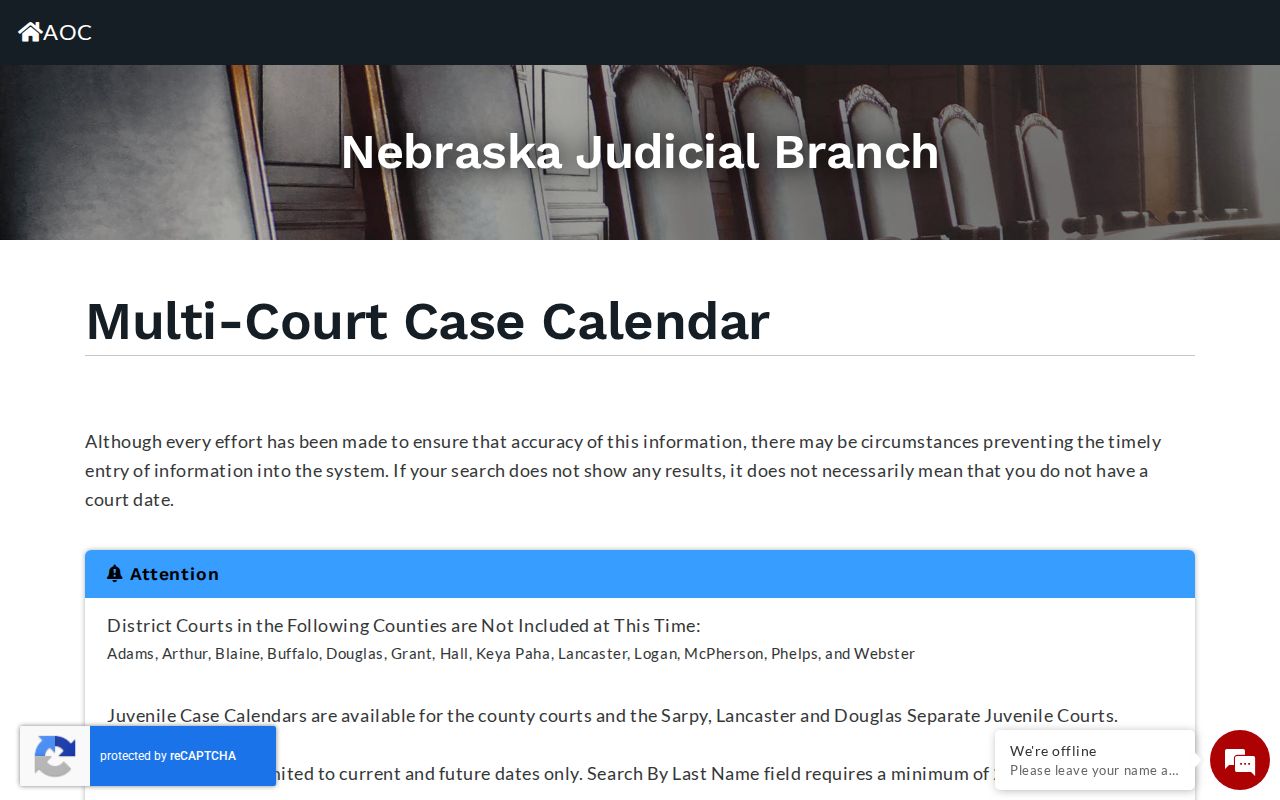
The form separates court type, county selection, and date or last-name searching. Choosing the court before typing search terms is the first check worth making.
Reading a Court Setting
A calendar row marks one scheduled event. Check every field against the most recent notice, register entry, or clerk confirmation. A "setting" is simply an appointment on the court schedule; it does not announce what happened, establish a final result, or replace a later order.
| Date | The day the listed event is scheduled. A date shown in the calendar may later be continued or reset. |
|---|---|
| Time | The listed start time or docket-call time. Confirm whether the court expects a general call or an individual appearance. |
| Courtroom | The location or courtroom field identifies where the setting is listed to occur; other Banner hearings may be placed as needed. |
| Judge | The assigned judge or court information associated with the calendar event, not a guarantee of a final ruling. |
| Setting Type | The scheduled action, such as arraignment, hearing, pretrial event, motion setting, or trial. Read the register for later action. |
The case number and caption help you tell similarly named cases apart. For the full chronology of a Banner County case, turn to the Nebraska register of actions and the most recent order instead of relying on a calendar entry alone.
Banner County Court Calendar: Gering Arraignments and Banner Jury Trials
Location matters more than usual on a Banner County Court calendar. The court is staffed from Gering. Arraignments follow a fixed pattern. Criminal and traffic arraignments are set for the first Wednesday of each month at 11 a.m. at the Scotts Bluff County Courthouse, because county-court services are remotely staffed from Scotts Bluff County Court in Gering. Other hearings land wherever fits. The court picks an appropriate location as needed.
Still, not every Banner proceeding happens in Gering. The official Banner County Court information states that all Banner County jury trials are conducted in Banner County. For any single setting, the specific notice and the calendar location control, and the recurring arraignment schedule is no substitute for a current court date.
Resets, Continuances, and Cancellations
A reset entry means the event moved. So does a "continued to" entry. None of these is a disposition of the case. A setting vanishing from a calendar can also just mean a new date, a new location, a restricted event, or a corrected entry. It does not necessarily mean the end of a case.
Check the newest register entry or order before drawing conclusions. Confirm any replacement setting with the correct clerk. If you have an attorney, get confirmation through that attorney too. An older notice stops counting once the court enters a later change.
When a calendar and a notice conflict, the later court order or clerk-confirmed setting deserves prompt attention. The public calendar helps you find a listed event. It cannot resolve a scheduling conflict on its own.
Banner District Court Docket Settings Under Local Rule 12-12
District 12 Local Rule 12-12 sets a framework. It is not a fixed Banner trial calendar. Trial dockets are called at the times and places ordered by the district judge. Once a cause is at issue, the rule points to trial during the current or next succeeding term, unless a statutory continuance applies. The assigned judge controls trial, pretrial, and motion scheduling. Don't infer a recurring date from the rule alone.
For any Banner District Court matter, rely on the current calendar, a filed scheduling order, and clerk confirmation. The Nebraska JUSTICE implementation history page traces the rollout of the state's electronic court system.
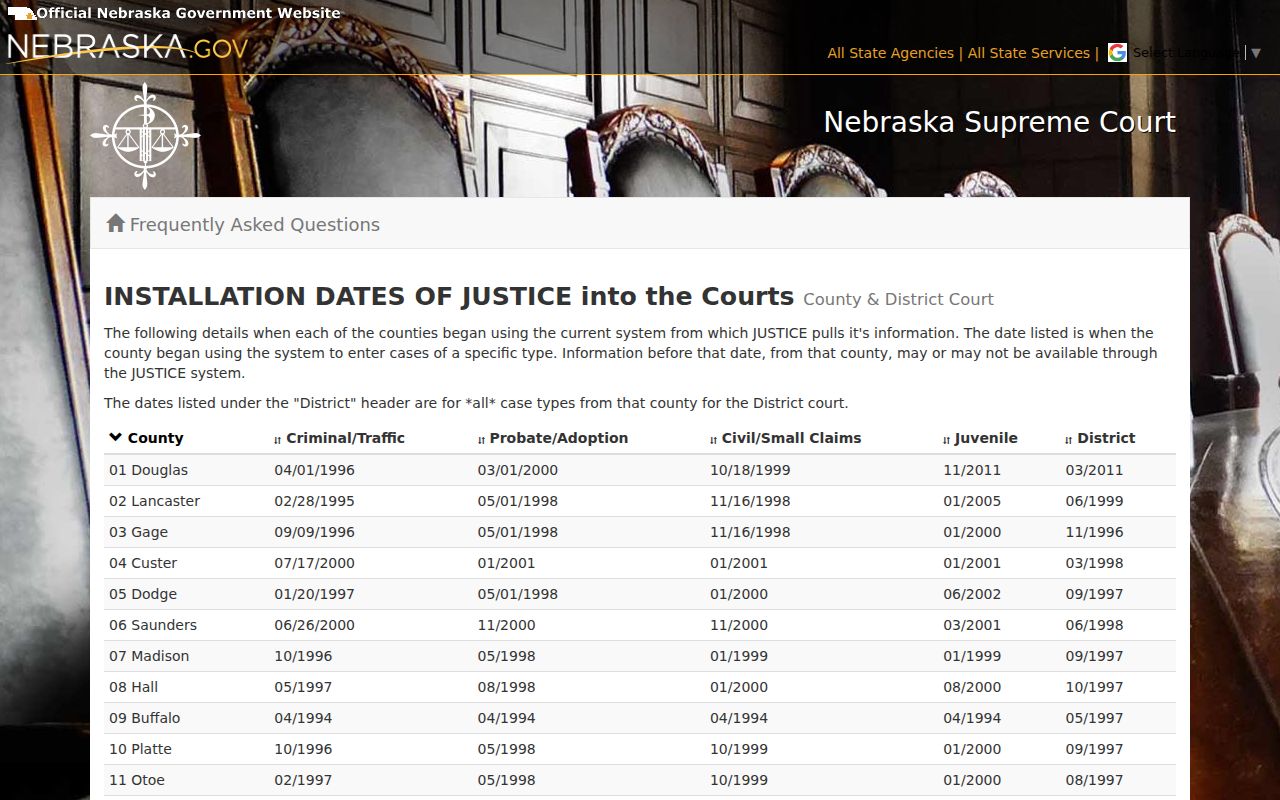
Banner's electronic coverage has clear start dates. Criminal and traffic coverage reaches back to April 2000, district coverage to June 2000, and civil and related coverage to January 2001. Older or missing records may need a clerk or terminal check.
What To Do If You Miss a Setting
Call the court promptly after missing a setting. Ask about the status and the next step. For a missed citation date, Nebraska's court-payment information directs people to contact county court. The clerk can identify a listed setting or record location but cannot give legal advice, so a party may also need to consult an attorney.
Missed a Setting? Ignoring a citation may add fees, lead to license consequences, or result in a warrant.
Use the county-court contact channel promptly to confirm the record and any new date. This is general information, not advice for a particular case.
Banner County Calendar Records and the Register of Actions
The calendar answers one question. It tells you what setting is listed. The register of actions is different. It builds the chronological court record, which can include filings, orders, later setting changes, and disposition information. A calendar row may show court or county, case number, caption, judge, date and time, location, and setting action, while the register supplies the context a row cannot.
When a search comes back empty, check the court, the spelling, the case type, and the approximate year before calling it complete. Records may be confidential, newly entered, moved, or not yet converted. For a copy or an access decision, use the clerk and the proper court-record process. A public calendar view is never the whole file.
The gap matters most for older Banner records. The electronic implementation dates describe historical coverage, but the clerk remains the source for an official record location or a requested copy.